
























13 Best Sunset Points in the USA (2026 Guide)
Feb 23, 2026
Ritik Rana
Introduction: Why Americans Chase the Sun
America does sunsets extraordinarily well. The sheer geographic diversity of the country — desert canyons, volcanic coastlines, high alpine ridgelines, flat Gulf barrier islands, Pacific sea stacks — means that the same astronomical event produces wildly different experiences depending on where you are standing.
A Grand Canyon sunset and a Florida Keys sunset are both magnificent and share almost nothing in common visually.
These are the 13 best places in the United States to watch the sun go down — ranked not just for the quality of the light, but for the totality of the experience.
1. Grand Canyon South Rim, Arizona
State: Arizona Best viewpoint: Mather Point, Yavapai Point, Desert View Watchtower Best season: September to November Crowd level: High at main points, low at Desert View (25 miles east)
Why No Sunset Compares to the Grand Canyon at Dusk
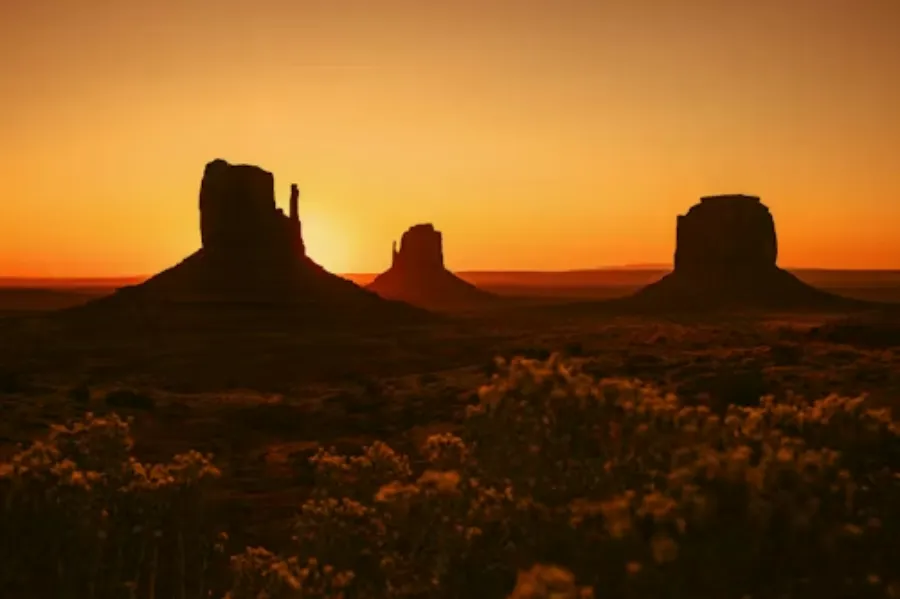
The Grand Canyon sunset is the benchmark against which every other American sunset is measured, and it earns that position completely. As the sun descends toward the western horizon, it does something to the canyon walls that few landscapes on Earth quite replicate: the layered bands of Vishnu schist, Tapeats sandstone, Bright Angel shale, and Coconino sandstone — each a different mineral composition, each a different colour — absorb and reflect the changing light independently, so that the canyon appears to shift through a dozen distinct colour palettes in the space of 30 minutes.
At Mather Point, the South Rim's most accessible overlook, the canyon drops away 4,500 feet below your feet and extends 10 miles to the North Rim. As the sun moves toward the horizon, the shadows in the canyon deepen and the lit surfaces intensify — from warm gold to burnt orange to a deep, saturated red that seems almost unnatural against the purple shadow filling the canyon floor. In the final minutes before the sun disappears, the inner canyon glows while the rim goes dark, creating a brief inversion of light that photographers specifically plan around.
Desert View, 25 miles east of the main visitor area, offers a dramatically less crowded alternative with arguably the finest canyon sunset panorama of all — looking both up and down the Colorado River corridor with the Painted Desert extending east into the distance.
What makes it special: The canyon's depth means sunset light lingers on the inner walls long after the rim goes dark — extending the golden hour by a full 15 to 20 minutes beyond what flat terrain would offer.
Pro tip: Arrive at least 90 minutes before sunset to secure a position at Mather Point. For solitude, drive to Lipan Point or Navajo Point — unmarked overlooks east of Desert View that offer stunning canyon views with almost no other visitors.
Don't miss: Stay 20 minutes after the sun drops. The post-sunset alpenglow — a pink and lavender luminescence that settles over the canyon rim — is frequently more beautiful than the sunset itself and almost always photographed less.
2. Mallory Square, Key West, Florida
State: Florida Best viewpoint: Mallory Square Dock, Sunset Pier, Western Union Schooner Best season: October to April (dry season, clearest skies) Crowd level: Very high — and that is part of the point
The Sunset as Community Event
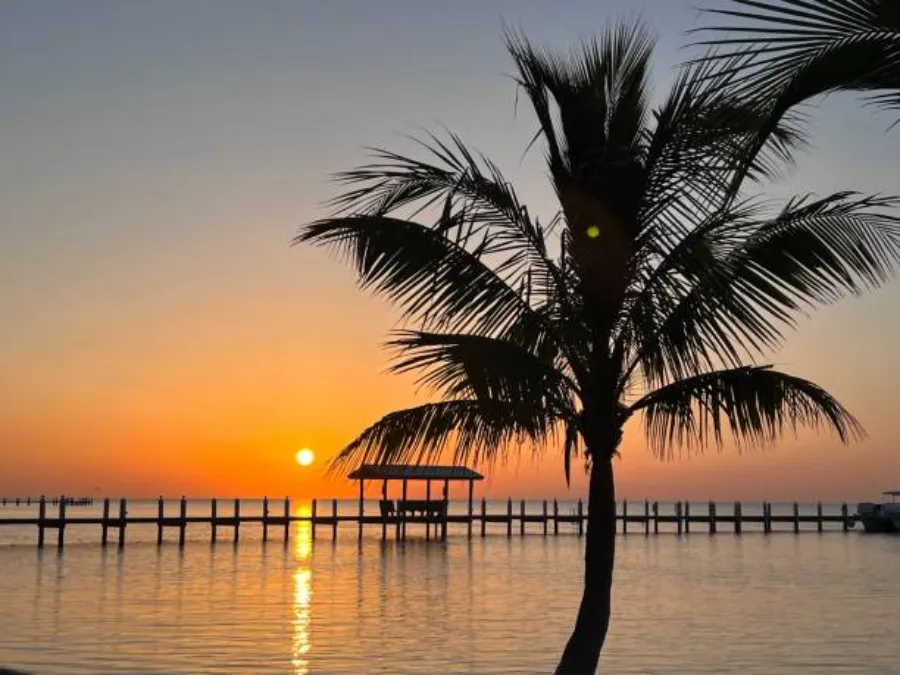
Key West's Mallory Square sunset is unlike any other on this list because it is not just a natural event — it is a performance, a ritual, and a community gathering that has been happening every single evening for decades. An hour before sunset, street performers, artists, food vendors, tarot card readers, and musicians assemble on the waterfront dock. The crowd builds steadily, drawn from the town's bars and guesthouses, growing to several hundred people facing west across the Gulf of Mexico as the sun descends.
When the sun finally touches the water, the crowd applauds. Every evening. Without fail. Strangers clapping together for a sunset that will happen again tomorrow regardless of the applause — and somehow that makes it more joyful rather than less.
The sunset itself, over the open Gulf of Mexico with no obstructions to the western horizon, is legitimately spectacular. Key West sits far enough south (24.5°N latitude) that winter sunsets are dramatic and warm in colour, and the flat water of the Gulf reflects and amplifies the final colours in ways that rocky or forested backdrops cannot.
What makes it special: No other sunset point in America combines world-class natural light with a spontaneous human celebration that has become a cultural institution in its own right.
Pro tip: Book a sunset sail on one of the schooners departing from the Historic Seaport an hour before sunset — watching the Mallory Square crowd from the water, with the old town and its church steeples as backdrop, is its own extraordinary experience.
Don't miss: Arrive early enough to eat at the food stalls before the sunset — the conch fritters and fresh-squeezed lemonade at Mallory Square are a legitimately good meal, and eating while watching the light change on the Gulf is a perfect Key West moment.
3. Haleakalā Summit, Maui, Hawaii
State: Hawaii (Maui) Best viewpoint: Haleakalā Summit Visitor Center (10,023 feet) Best season: Year-round Crowd level: Moderate — timed entry reservations for sunrise limit early morning numbers; sunset visits are generally more relaxed
Watching the Sun Set from 10,000 Feet Above the Pacific
Most visitors to Haleakalā summit come for the famous sunrise — an alarm-clock-at-2-AM pilgrimage that requires timed entry reservations through Recreation.gov and has become one of Hawaii's most iconic travel experiences. Fewer people know that the sunset from the summit is equally extraordinary and significantly more logistically manageable. Unlike sunrise, sunset at Haleakalā does not currently require timed entry reservations, though visitors should check Recreation.gov for the most current park policies before visiting, as these can change seasonally.
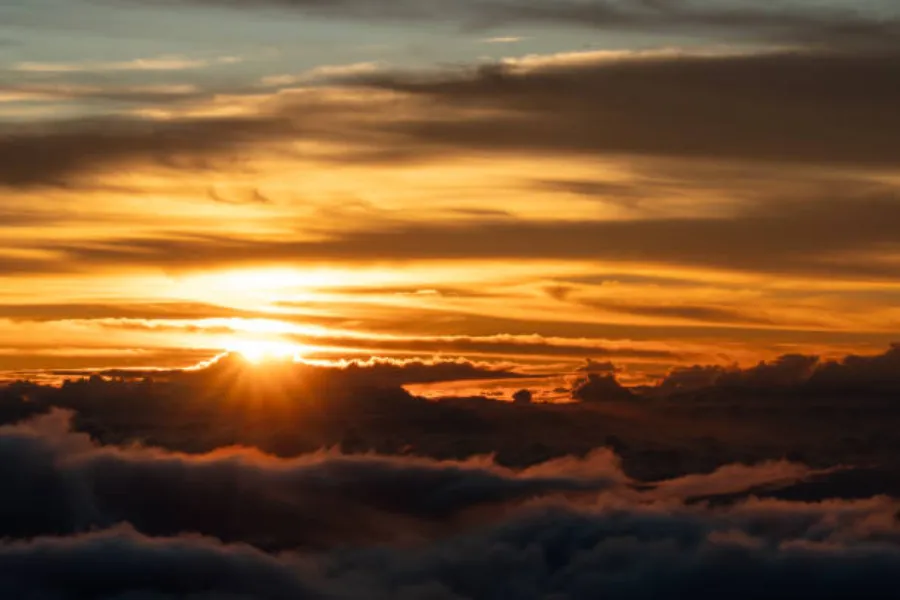
At 10,023 feet, Haleakalā's summit sits above the cloud layer that typically forms around 6,000 to 7,000 feet on Maui's windward slopes. Watching a sunset from above the clouds — the white cloud deck extending to the horizon below you, the Pacific visible beyond it, the volcano's massive cinder cone crater in front of you, and the sky above transitioning through every color in the spectrum — is a fundamentally different experience from any sea-level sunset. The scale is planetary. The feeling of elevation and exposure is exhilarating rather than vertiginous.
As the sun descends, it illuminates the cloud layer below in extraordinary colors — pink, gold, orange — while the summit itself goes into cool shadow. The cinder cone's red and rust-colored landscape, the silhouettes of the endangered silversword plants along the crater rim, and the vast Pacific horizon combine into one of the most otherworldly sunset settings in the United States.
What makes it special: Watching the sun set from above the cloud layer produces a visual experience available at very few points in the entire country — a perspective normally reserved for aircraft passengers.
Pro tip: Bring significantly warmer clothing than you think you need — summit temperatures drop rapidly after sunset and can reach the low 40s°F even in summer. Confirm current access and any permit requirements at Recreation.gov before your visit.
Don't miss: Stay for 30 minutes after sunset for the stars. Haleakalā has among the darkest skies accessible by road in the Hawaiian Islands — the Milky Way becomes visible within minutes of full dark.
4. Delicate Arch, Arches National Park, Utah
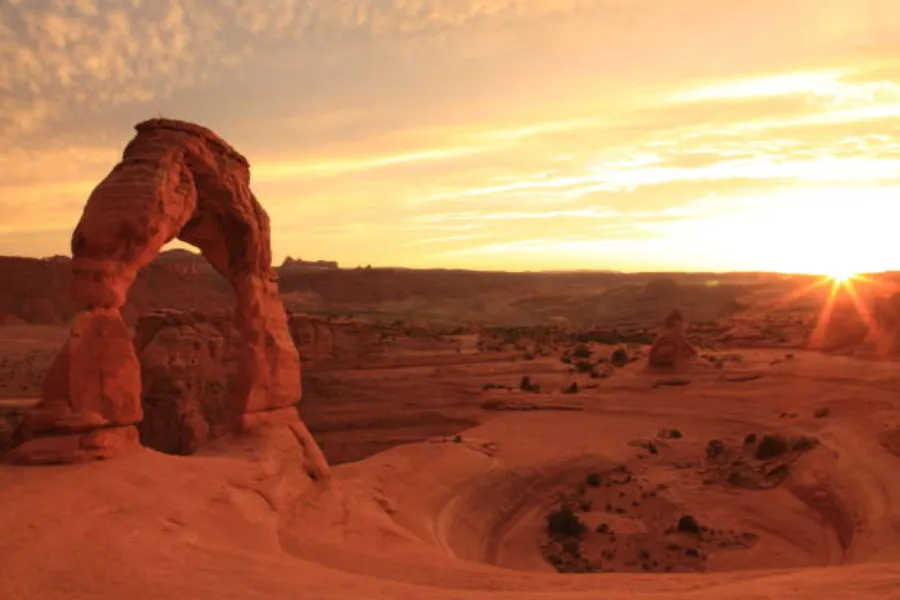
State: Utah Best viewpoint: Delicate Arch viewpoint (upper bowl) Best season: April to June, September to October Crowd level: High at the arch itself — arrive early or accept the company
The Arch That Becomes a Frame
Delicate Arch is the most iconic natural arch in the United States — 52 feet tall, freestanding on the lip of a slickrock bowl with the La Sal Mountains behind it — and at sunset it becomes something even more than iconic. The Entrada sandstone from which it is formed contains iron oxide that intensifies dramatically in warm light, shifting the arch's colour from its daytime orange-red through a progression of increasingly saturated tones as the sun descends: burnt sienna, deep rust, cardinal red, and finally — in the last minutes of direct light — a colour so saturated and vivid it appears almost luminous against the darkening sky behind it.
The 1.5-mile hike to reach the arch crosses exposed slickrock with no shade — challenging in midday summer heat but transformed at golden hour into one of the finest approach walks in American national parks. Arriving at the arch bowl as the light shifts is a genuine emotional experience; the gasps from other visitors at key colour moments are entirely unself-conscious and entirely justified.
What makes it special: The arch physically frames the La Sal Mountains and the sky beyond it, creating a naturally composed view that rewards almost any photographer — the landscape does the compositional work for you.
Pro tip: Begin the hike 2.5 hours before sunset. This allows a comfortable pace, arrival at the arch with time to find a position, and a leisurely descent in the last of the evening light. Bring a headlamp for the return — the trail is unlit and the descent can extend past dark.
Don't miss: Look behind you as you hike out after sunset. The eastern sky over the La Sal Mountains frequently develops extraordinary pink and lavender alpenglow that most visitors miss because they are looking west.
5. Haystack Rock, Cannon Beach, Oregon
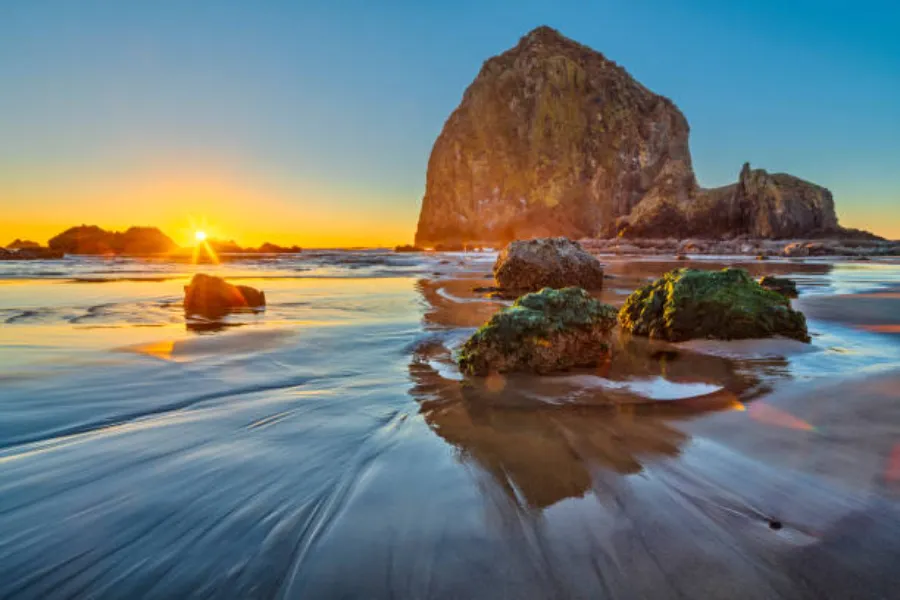
State: Oregon Best viewpoint: Cannon Beach directly in front of Haystack Rock Best season: May to September (clearest skies), November to February (dramatic storms) Crowd level: Moderate in shoulder season, high in summer
Where the Pacific Sets Fire to the Sea Stacks
Oregon's Pacific Coast sunsets are fundamentally different from anything on the East Coast or in the desert interior. The combination of sea stacks — volcanic rock columns rising from the surf — a fog-prone atmosphere that diffuses and colours the light in unexpected ways, and the sheer power of the open Pacific creates sunset conditions that range from classically golden to dramatically stormy to eerily luminous, often within the same week.
Haystack Rock at Cannon Beach is among the finest single frames for an Oregon coast sunset. The 235-foot sea stack sits close enough to shore that at low tide you can walk to its base, and the composition — foreground tide pools reflecting the sky, middle ground of surf breaking around the rock, background of the open Pacific horizon — is one of the most naturally cinematic in the country. The tidal pools at the base of the rock are alive with sea stars, anemones, and hermit crabs that catch the late light in extraordinary colours.
Oregon's maritime atmosphere means sunset light here is unpredictable in the best possible way. A completely overcast afternoon can break open in the final 20 minutes before sunset, releasing a beam of gold that lights the sea stacks from the side while the sky above remains dark — a "sucker hole" sunset that photographers wait hours for and that produces images of startling beauty.
What makes it special: The combination of sea stacks, tide pools, reflective wet sand, and Oregon's unpredictable maritime light creates sunset conditions that are genuinely different from any other coastal sunset in the country.
Pro tip: Check the tide table before going. A low or minus tide in the hour before sunset exposes the largest reflection pools and allows closest approach to the rock — transforming the visual experience significantly.
Don't miss: Walk 10 minutes south along the beach from Haystack Rock to the area in front of Tolovana Park. The view back north to the rock, with the Ecola State Park headland behind it, is frequently better than the head-on view.
6. Mesa Arch, Canyonlands National Park, Utah
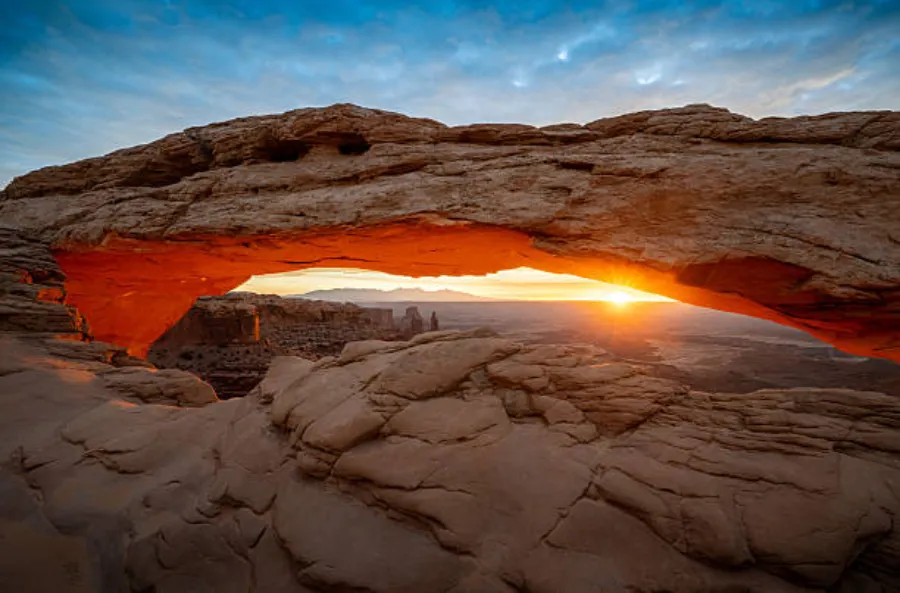
State: Utah Best viewpoint: Mesa Arch (0.5-mile trail from parking area) Best season: March to May, September to November Crowd level: Moderate at sunset (much lighter than the famous sunrise crowds)
Utah's Most Perfectly Framed View
Mesa Arch is famous as a sunrise location — the morning light illuminates the underside of the arch in a warm orange glow that photographers queue for before dawn. But the sunset view through Mesa Arch, looking southwest over the White Rim and the canyons of the Colorado and Green Rivers dropping 1,500 feet below, is a completely different and equally extraordinary experience that receives a fraction of the attention.
The arch frames a panorama of layered canyon country that extends 50 miles to the horizon — mesa tops, canyon rims, river gorges, and the distant Abajo Mountains all visible simultaneously in a view that communicates the scale of the Colorado Plateau more effectively than almost any other single vantage point in Utah. As the sun sets, the canyon walls below cycle through the full spectrum of warm desert colours, and the arch itself — backlit from the west — becomes a dark frame against the glowing sky beyond.
What makes it special: The arch physically frames the sunset panorama, creating a composed view that would require significant photographic skill to improve upon. The short approach trail makes it accessible to almost any visitor.
Pro tip: Arrive 75 minutes before sunset to secure a position on the rim ledge beside the arch — it fills with photographers in the final hour. The ledge drops away steeply on the far side; watch your footing in the fading light.
Don't miss: After the sun sets, walk 200 yards north along the canyon rim for an unobstructed view of the afterglow developing over the canyon — without the arch crowds, with a wider panorama, and with the canyon floor going from orange to deep blue-purple as the light fades.
7. Cadillac Mountain, Acadia National Park, Maine
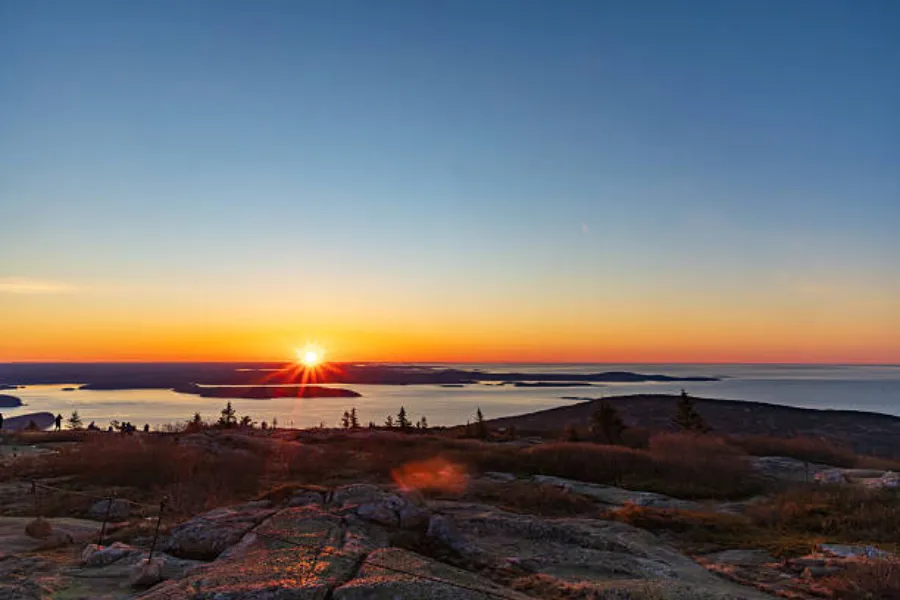
State: Maine Best viewpoint: Cadillac Mountain Summit (1,530 feet) Best season: September to October (fall foliage), May to June Crowd level: Moderate — summit road has timed entry in peak season
Where the Atlantic Goes from Gold to Violet
Cadillac Mountain is famous for being one of the first places in the continental United States to receive sunlight each morning. Less discussed but equally rewarding is what happens at the other end of the day. As the sun sets in the west, the summit of Cadillac offers a 360-degree panorama that encompasses Frenchman Bay, the Porcupine Islands, the Atlantic Ocean to the south and east, and the mountains of Acadia to the west — an unobstructed horizon in virtually every direction at a height that puts you above most of the island's tree line.
The autumn version of this sunset, when the surrounding hills are in peak foliage and the bay is still warm enough to be calm and reflective, is one of the genuinely spectacular natural experiences available on the U.S. East Coast. The light hits the fall colour on the hillsides below the summit, the bay goes from silver to copper to dark blue, and the sky behind the western hills develops colours that feel disproportionately vivid for a New England evening.
What makes it special: The combination of 360-degree unobstructed horizon, coastal and inland scenery simultaneously visible, and fall foliage season timing creates a sunset experience found at very few other points on the East Coast.
Pro tip: The summit road requires timed entry vehicle reservations from late May through October — book at Recreation.gov well in advance. Alternatively, hike up via the Cadillac South Ridge Trail (7 miles round trip) which does not require a reservation and offers its own extraordinary views.
Don't miss: Bring a warm layer regardless of the afternoon temperature. The summit is exposed and the temperature drops quickly after sunset — and the post-sunset sky over the Atlantic develops extraordinary colour for 20 to 30 minutes after dark that is worth staying for.
8. Crater Lake Rim, Oregon
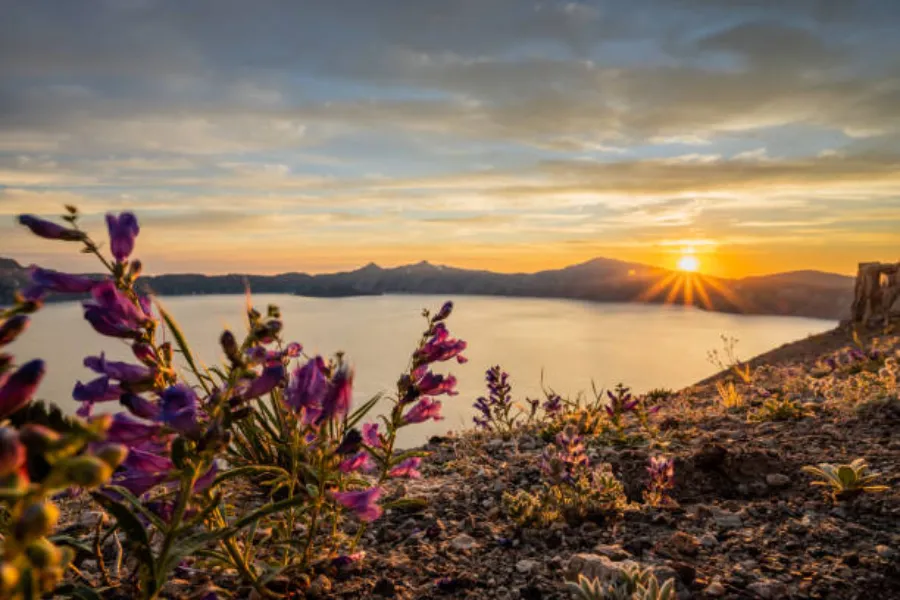
State: Oregon Best viewpoint: Watchman Peak Overlook, Rim Village, Cloudcap Overlook Best season: July to September (when rim roads are snow-free) Crowd level: Low to moderate — the lake's remoteness filters casual visitors effectively
Sunset Over the Deepest Lake in America
Crater Lake was formed 7,700 years ago when Mount Mazama — a 12,000-foot Cascade volcano — erupted catastrophically and collapsed inward, creating a caldera that has since filled with 1,943 feet of snowmelt and rain. The result is the deepest lake in the United States and widely regarded as one of the bluest bodies of water in the world — a blue so intense, so saturated, so unlike any other body of water that first-time visitors frequently stop in their tracks at the rim and simply stare.
At sunset, the interplay between that extraordinary blue and the warm orange-gold of the setting sun creates colour combinations that seem to push the limits of what nature should be capable of. The lake surface goes from its daytime cobalt to a deep teal as the direct light leaves it, while the caldera walls — composed of layered volcanic rock in rust, gray, and ochre — catch the last sun in vivid warm tones. Wizard Island, the small cinder cone rising from the western part of the lake, goes from green to black silhouette against the glowing western sky.
Watchman Peak overlook, a short hike above the rim, offers the finest sunset position on the lake — elevated above the rim road, looking directly west across the lake with Wizard Island directly below.
What makes it special: The combination of one of the world's most intensely blue lakes and warm sunset light creates a colour contrast that few places in the United States can rival.
Pro tip: Crater Lake's rim elevation (around 7,000 feet) means temperatures drop dramatically after sunset — bring a proper jacket even in August. The Watchman Peak trail (1.6 miles round trip) should be started 90 minutes before sunset.
Don't miss: Stay for the full dark. Crater Lake is among the least light-polluted places in the continental United States — the stars reflected in the lake's perfectly still surface on a moonless night are extraordinary.
9. Zabriskie Point, Death Valley National Park, California
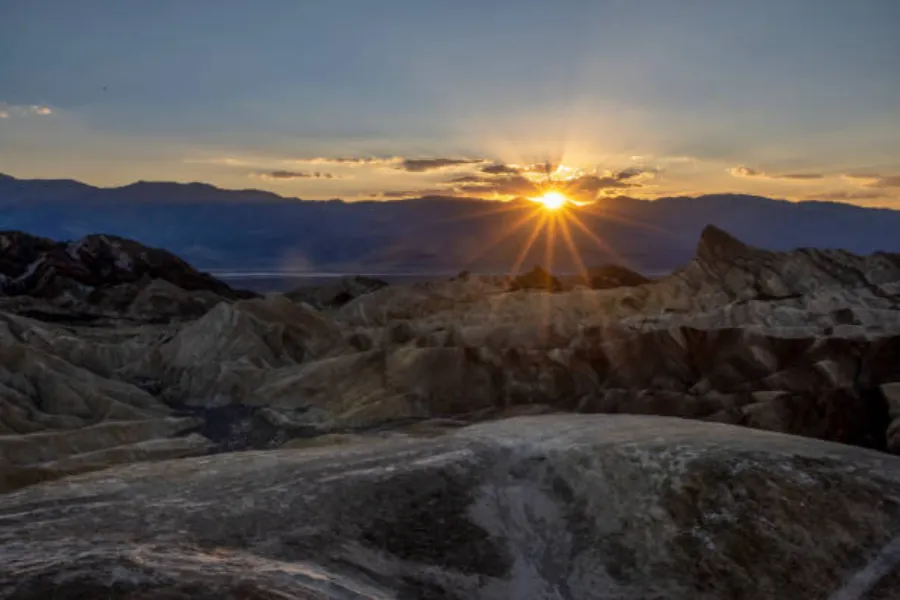
State: California Best viewpoint: Zabriskie Point overlook (2-minute walk from parking) Best season: October to April (outside of extreme summer heat) Crowd level: Moderate — the overlook is small but the timing filters casual tourists
When Badlands Geology Meets Desert Light
Zabriskie Point is perhaps the most purely geological sunset experience in the United States. The overlook looks out over the Badlands of Death Valley — a landscape of eroded mudstone hills in shades of gray, tan, yellow, and brown that were formed from ancient lake sediments deposited five million years ago. In flat light, the Badlands are interesting. In the warm, low-angle light of golden hour and sunset, they are extraordinary.
The ridges and gullies of the Badlands catch directional light in ways that emphasize every fold and eroded channel, creating deep shadows that define the landscape's three-dimensional structure far more dramatically than any other lighting condition. The colours shift continuously as the sun moves — the yellowish mudstone going amber, then gold, then orange-red, while the shadow-filled gullies go blue-gray and then purple. In the final minutes of light, the contrast between the lit ridge tops and the dark valleys below creates an almost abstract composition of extraordinary beauty.
Photographers have long favoured Zabriskie Point at sunset precisely because the Badlands geology amplifies directional light so effectively — the landscape's ridges and folds do compositional work that would take considerable skill to replicate elsewhere, and the warm desert palette at golden hour produces results that reward even a casual visit with a phone camera.
What makes it special: The Badlands geology amplifies directional sunset light more dramatically than almost any other landscape type — the difference between a Zabriskie Point sunset and a flat-terrain desert sunset is the difference between a whisper and a shout.
Pro tip: Arrive 45 minutes before sunset and watch the landscape transform gradually — the changes begin well before the final golden light and the full sequence is worth experiencing. Bring a wide-angle lens if you shoot on a camera; the panorama is too wide for a standard focal length.
Don't miss: Walk 10 minutes east along the trail from the main overlook to a secondary ridge that looks back toward Zabriskie Point itself — the composition from this angle, with the overlook in the middle distance and the mountains behind, is frequently overlooked and often superior.
10. Malibu Pier, California — Hollywood's Sunset, Earned
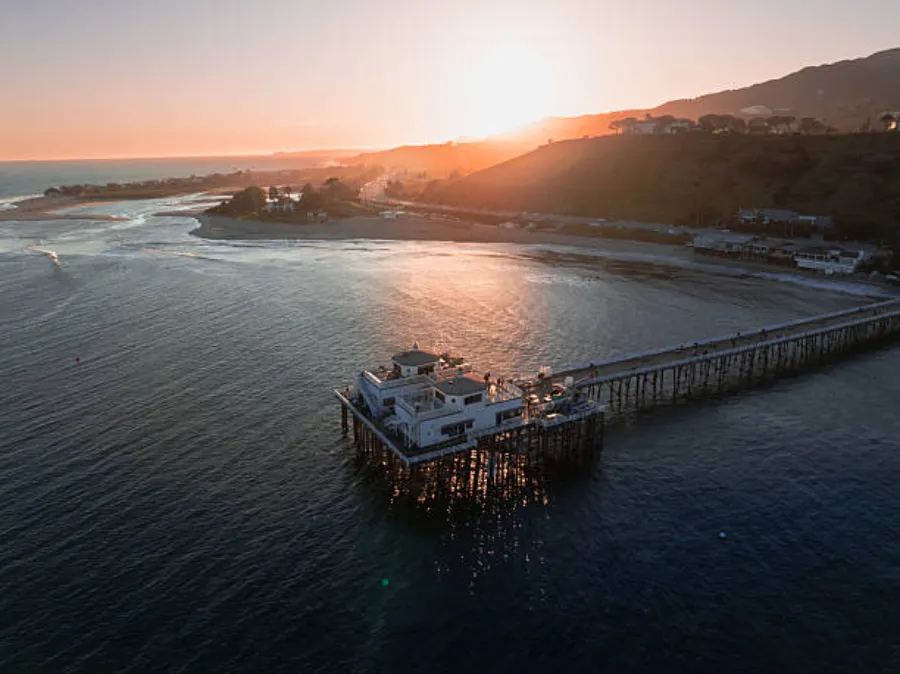
State: California Best viewpoint: Malibu Pier, El Matador State Beach (3 miles north) Best season: October to February (winter clarity and lower sun angle) Crowd level: Moderate at the pier, low at El Matador
The Pacific at Its Most Cinematic
Malibu's sunsets have appeared in more films, television shows, and music videos than any other location on this list — and while that familiarity risks reducing them to cliché, standing on Malibu Pier in November as the sun drops into the Santa Monica Bay reminds you that the cliché exists because the reality is genuinely, repeatedly magnificent.
What Malibu does that no inland desert sunset can is put the sun directly into the water. The moment of the sun touching the Pacific horizon — and then the 3 to 4 minutes it takes to fully disappear below it — is a specific visual experience that requires an unobstructed ocean horizon. The water reflects and fractures the light in a long path from the horizon directly toward the viewer, and the colour temperature of that reflection shifts every 30 seconds in ways the eye tracks with an attention it rarely gives to static subjects.
El Matador State Beach, 3 miles north of the pier, adds sea caves and offshore rocks to the equation — creating a more complex and less-visited sunset composition that rewards the short scramble down the cliff access trail.
What makes it special: The Pacific Ocean horizon at Malibu delivers among the purest versions of the sun-into-water sunset available on the U.S. coast — unobstructed, wide, and luminously reflective in ways that lakes and bays cannot match.
Pro tip: Check the surf report before visiting El Matador — the beach disappears at high tide and the sea caves are only accessible in calm conditions. The best El Matador sunset requires a low tide in the hour before dark.
Don't miss: Stay facing east after the sun sets. The Santa Monica Mountains behind Malibu develop a remarkable pink alpenglow in the 10 minutes following sunset — looking inland can be as beautiful as looking out to sea.
11. Vermilion Cliffs, Arizona — Colour That Defies Description
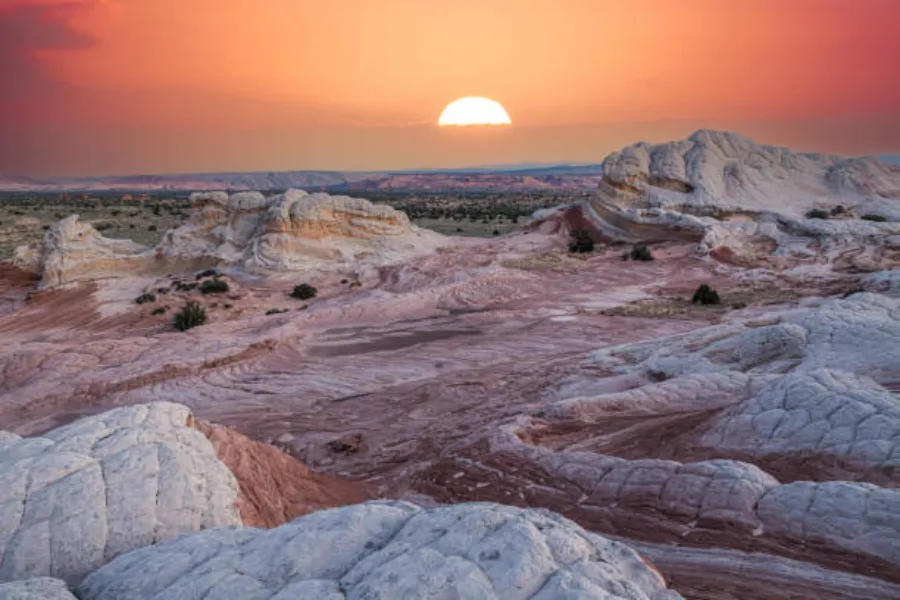
State: Arizona (near Page, AZ and the Utah border) Best viewpoint: Highway 89A pullouts between Jacob Lake and Marble Canyon Best season: March to May, September to November Crowd level: Very low — this is one of the least-visited great sunset locations in the American Southwest
3,000-Foot Cliffs That Absorb Sunset Like a Sponge
The Vermilion Cliffs are a 3,000-foot escarpment of Navajo and Wingate sandstone stretching for 40 miles across the Arizona Strip — a remote plateau between the Grand Canyon and the Utah border that sees a fraction of the visitors that neighbouring national parks receive. The cliffs are named for their colour, which in ordinary light is a deep brick red. At sunset, that colour transforms into something that the word vermilion was invented to describe and still undersells: an incandescent red-orange that seems to emit light rather than reflect it.
Watching the sunset light move across the face of the Vermilion Cliffs from a pullout on Highway 89A is a slow, almost meditative experience — the shadow line descends the cliff face over the course of 30 minutes, the lit portion above it intensifying in colour as the angle of light becomes more acute, until the final minute of direct sun produces a saturated crimson that is among the most extraordinary natural colours visible anywhere in the American Southwest.
What makes it special: The sheer scale of the cliffs — 3,000 feet of iron-rich sandstone oriented to face the setting sun — produces a sunset colour display that few locations in the continental United States can rival.
Pro tip: The best viewpoints are the informal pullouts along Highway 89A between the Marble Canyon Lodge and the Vermilion Cliffs National Monument sign. No trails required — the view is from the road itself. Bring binoculars to spot California condors, which roost on the cliff ledges and are frequently visible at dusk.
Don't miss: Look up. The condors that nest in the Vermilion Cliffs — reintroduced here in 1996 in one of conservation's great success stories — are often soaring on evening thermals as the sun sets. Watching a condor with a 9.5-foot wingspan circle above one of the most dramatic geological formations in the Southwest in the last light of the day is a wildlife experience unlike any other.
12. Sanibel Island, Florida — Shelling, Silence, and Gulf Light
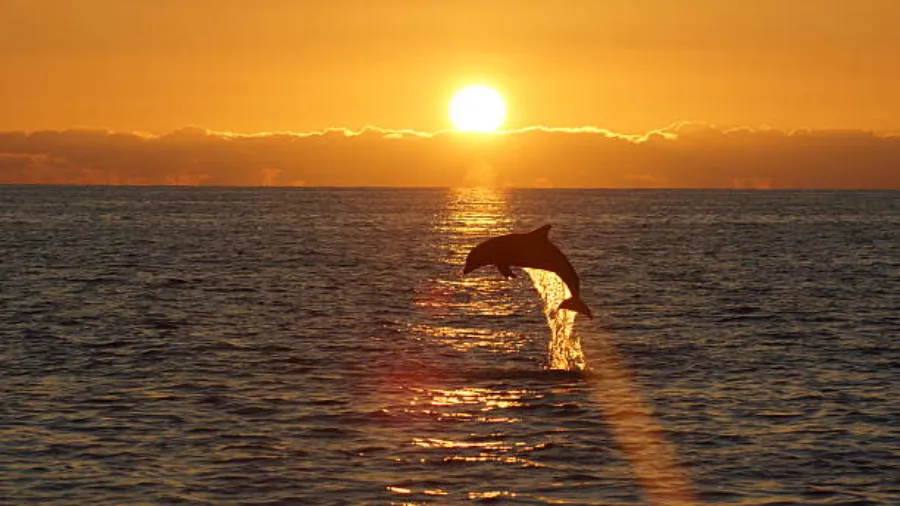
State: Florida (Gulf Coast) Best viewpoint: Lighthouse Beach Park, Bowman's Beach, Blind Pass Best season: November to April Crowd level: Low to moderate — Sanibel's causeway toll and shell-focused tourism culture creates a self-selecting visitor base
The Gulf at Its Gentlest and Most Golden
Sanibel Island sits on Florida's southwest Gulf Coast and is oriented east to west rather than north to south — a geographical accident that places its most beautiful beaches directly facing the setting sun across the open Gulf of Mexico. The result is one of the finest sunset orientations of any barrier island on the Gulf Coast, and the combination of Sanibel's famously calm Gulf water, its extraordinary shelling beaches, and the warm tones of a Gulf sunset creates an evening experience of particular gentleness and beauty.
Sanibel sunsets are not the dramatic, saturated affairs of the desert Southwest or the stormy drama of the Oregon coast. They are warm, slow, and deeply calming — the sky going through long progressions of gold and peach and rose above perfectly flat Gulf water that mirrors every colour shift above it. The shelling beaches mean that the foreground of a Sanibel sunset often includes fellow visitors bent double in the "Sanibel Stoop," searching the sand for lightning whelks and junonia shells as the light fades — a distinctly human and quietly comic element that makes these sunsets feel lived-in rather than merely scenic.
Note: Visitors should check current beach and refuge access conditions before traveling, as restoration efforts following Hurricane Ian may affect certain facilities and access points on the island.
What makes it special: The combination of east-west island orientation, flat Gulf water reflection, and Sanibel's particular amber-gold light quality creates a sunset experience of warmth and visual gentleness that serves as the perfect counterpoint to the grand drama of the Southwest's canyon sunsets.
Pro tip: Bowman's Beach on the island's northwest end is the finest sunset beach on Sanibel — quieter than Lighthouse Beach, with a longer stretch of west-facing shore and excellent shelling in the low tide exposed by the evening. Arrive an hour before sunset to walk the beach and collect shells before settling in to watch the light.
Don't miss: The Ding Darling National Wildlife Refuge wildlife drive closes at sunset and the egrets, roseate spoonbills, and ibis that roost in the mangroves near the drive's end are illuminated in extraordinary pink light in the final 20 minutes before dark — a wildlife and light experience that rivals the beach sunset itself.
13. Multnomah Falls Overlook at Dusk, Columbia River Gorge, Oregon
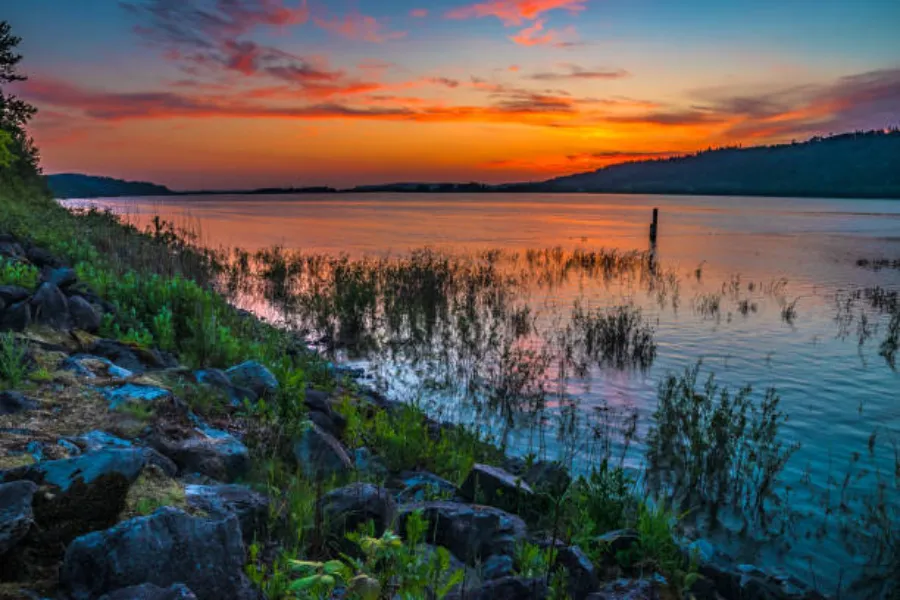
State: Oregon Best viewpoint: Crown Point Vista House, Rowena Crest Viewpoint, Portland Women's Forum State Scenic Viewpoint Best season: March to June (wildflowers), September to November (fall colour) Crowd level: Moderate at Crown Point, low at Rowena Crest
A River Gorge That Glows
The Columbia River Gorge is an 80-mile canyon carved by the Columbia River through the Cascade Range — one of the only low-elevation breaches through the mountains between Canada and California, and the most significant river-level passage through the Cascades. At sunset it produces a light show of a completely different character from anything else on this list. The gorge is oriented roughly east to west, which means the setting sun travels directly up its length, illuminating the basalt cliffs, the river surface, and the Oregon and Washington hillsides simultaneously in warm directional light.
Crown Point Vista House — an early 20th-century stone observatory perched on a 733-foot basalt promontory above the river — offers the most dramatic gorge sunset view: the Columbia snaking west toward Portland, the Vista House's dome catching the last light, and the Washington hills going from green to gold to deep violet as the sun descends. The Historic Columbia River Highway connecting the gorge's viewpoints is one of the great scenic drives in the Pacific Northwest, and driving it in the hour before sunset — stopping at Vista House, Latourell Falls, Shepperds Dell — is a moving experience in any season.
Rowena Crest, on the drier eastern end of the gorge, offers a completely different sunset character — the river below with the high desert plateau of the Columbia Basin extending east to the horizon, catching the sunset in wide, open, unforested light that feels more like eastern Oregon than the lush western gorge.
What makes it special: The gorge's orientation channels sunset light directly up the river corridor, illuminating the basalt cliffs and river surface in a way that a single overlook cannot replicate — the experience is best as a slow drive through multiple viewpoints in the golden hour.
Pro tip: Drive the Historic Columbia River Highway from Troutdale east toward Rowena in the two hours before sunset, stopping at multiple viewpoints. The progression of light quality as you move east through the gorge — from forested and atmospheric to open and dramatic — is its own journey.
Don't miss: The Portland Women's Forum State Scenic Viewpoint, just west of Crown Point, offers the finest framed view of Vista House itself against the gorge — a composition that most visitors miss because they drive straight to Crown Point without stopping 400 yards short of it.
Final Thoughts: The Sun Sets Every Day. Most People Miss It.
The remarkable thing about the sunsets on this list is not that they are exceptional — it is that they are reliable. The Grand Canyon does not save its finest light for special occasions. Mallory Square applauds every single evening regardless of how many people show up.
Haleakalā's summit is above the clouds every clear afternoon. The Vermilion Cliffs catch the last sun whether you are there to watch or not.
The only question is whether you show up.
America's light is extraordinary and it runs on a schedule. Pick a viewpoint, check the time, and get there early. The rest takes care of itself.

USA
Latest Blogs
30 Hidden Beaches in Sri Lanka
13 Best Sunset Points in Sri Lanka (2026 Guide)
25 Photos That Will Make You Want to Visit Sri Lanka Right Now

7 Underrated Weekend Getaways Near Colombo

10 Budget-Friendly Cities in Sri Lanka
30 Hidden Beaches in the USA
13 Best Sunset Points in the USA (2026 Guide)

Hostel vs Hotel vs Airbnb in USA: What Is Really Cheaper in 2026?
25 Photos That Will Make You Want to Visit the USA Right Now
7 Underrated Weekend Getaways Near Chicago
10 Budget-Friendly Cities in the USA You Can Visit This Year
7 Days in Sri Lanka: The Ultimate Itinerary (2026 Guide)
7 Days in Switzerland: The Ultimate Itinerary (2026 Guide)
7 Days in UAE: The Ultimate Itinerary (2026 Guide)
7 Days in Germany: The Ultimate Itinerary (2026 Guide)
7 Days in Hong Kong: The Ultimate Itinerary (2026 Guide)
Sri Lanka for First-Time Visitors: Complete Travel Guide 2026
Why Italy Is the Ultimate European Vacation for Americans
Best Beaches in India

Best National Parks in Sri Lanka for Wildlife & Safaris

Best Places to Visit in Sri Lanka

Explore India’s Tropical Escapes: Goa, Kerala & Andaman
Visit India’s Iconic Landmarks: Taj Mahal & More
7 Best Summer Travel Destinations in India
Small Italian Towns That Make You Fall in Love With Italy
Experiencing Maori Culture as a Respectful Traveler
Traveling Spain by Train vs Renting a Car

Eating in Italy: Lessons About Food, Time & Culture
Small Towns in New Zealand: A Unique Travel Experience
Exploring Southern Spain’s White Villages: Travel Guide
Traveling Italy Slowly: Fewer Cities, Better Experiences
Driving New Zealand’s Scenic Roads Without Rushing the Trip
Living on Spanish Time: How Slow Days Change Travel

Italy Beyond Rome & Venice: Cities That Truly Surprised Me
New Zealand Without Adrenaline: A Calm Way to Explore
Spain Beyond Barcelona & Madrid: Cities That Feel Authentic
Winter Travel in Finland Without Extreme Adventure
Photographing Iceland Without a Drone or Expensive Gear
A Slow Travel Journey Through Norway’s Small Coastal Villages
Experiencing Sauna Culture in Finland as a Traveler
Driving Iceland’s Ring Road: What No One Tells You Before You Go
What It’s Really Like Traveling Above the Arctic Circle in Norway
Why Finland Feels Like the Most Peaceful Country to Travel In
Iceland Is Not Just About Waterfalls: Experiences That Surprised Me
Norway Beyond the Fjords: Unexpected Experiences Most Travelers Miss
Best Nightlife Experiences in the USA (Clubs, Bars & Rooftops)
Best Beach Destinations in the USA for Relaxation & Water Activities
Top USA Cities to Celebrate New Year’s Eve

Best Festivals & Events in the USA Worth Traveling For
Best Weekend Getaways in the USA
Hidden Gems in the USA Most Tourists Miss
Best Cities to Visit in the USA for Tourists
Top National Parks in the USA You Should Visit Once in Your Life
Best Budget Travel Destinations in the USA
Best Time to Visit the USA: Month-by-Month Travel Guide
Top USA Road Trip Routes You Must Experience
Best Places to Visit in the USA for First-Time Travelers

Roast Duck A Juicy and Flavorful American Classic

Creamy Chicken A Rich and Comforting American Classic

Bacon Meatballs A Flavor-Packed American Comfort Favorite

Honey Mustard Chicken A Sweet and Savory American Favorite

Pork Tenderloin A Lean and Flavorful American Classic

Tacho Macau’s Hearty Portuguese-Inspired Comfort Dish

Malaysian Satay A Smoky Street Food Classic Loved Worldwide

Dutch Cheese Gouda and Edam, The Pride of the Netherlands

African Chicken Macau’s Bold Fusion Dish with Portuguese Roots

Laksa Malaysia’s Iconic Noodle Soup Bursting with Flavor

Poffertjes The Fluffy Dutch Mini Pancakes Loved by All

Macanese Pork Chop Bun Macau’s Iconic Street Food Sandwich

Roti Canai Malaysia’s Beloved Flaky Flatbread
Haring The Iconic Dutch Raw Herring Tradition

Minchi Macau’s Comforting Minced Meat Classic with Portuguese Influence

Char Kway Teow: Malaysia’s Smoky Stir-Fried Noodle Street Food Classic

Bitterballen: The Ultimate Dutch Comfort Snack

Portuguese Egg Tart Macau’s Iconic Custard Pastry with a Golden Legacy

Nasi Lemak Malaysia’s Beloved National Dish of Comfort and Flavor

Stroopwafels The Iconic Dutch Caramel Waffle Treat
Breadfruit and Fish A Classic Seychellois Coastal Comfort Dish

Brunost Norway’s Sweet and Savory Brown Cheese Tradition

New Zealand Meat Pies: The Ultimate Kiwi Comfort Food

Ladob Seychelles’ Sweet and Comforting Coconut Dessert

Kjottkaker Norway’s Classic Homemade Meatball Tradition
Fish and Chips New Zealand’s Iconic Coastal Comfort Food

Shark Chutney A Traditional Seychellois Seafood Delight

Lutefisk A Classic Norwegian Holiday Dish

Lamb The Quintessential New Zealand Culinary Delight

Octopus Curry A Flavorful Seychellois Seafood Classic
Rakfisk Norway’s Bold and Traditional Fermented Fish Delicacy

Pavlova New Zealand’s Light and Elegant Dessert Icon

Grilled Fish A Taste of the Seychelles Ocean

Farikal Norway’s Timeless Lamb and Cabbage Stew

Hangi The Ancient Earth-Cooked Feast of New Zealand Hangi

Hoppers (Appa) Sri Lanka’s Crispy Coconut Pancake Delight

Kottu Roti

String Hoppers (Idiyappam)

Pol Sambol

Paella

Tapas

Tortilla Española

Churros

Gazpacho

Rice and Curry

Alplermagronen
Swiss Chocolate

Rösti

Raclette

Cheese Fondue

Pide

Lahmacun

Baklava

Döner

Kebab

Khubz

Luqaimat

Shawarma

Al Harees

Machboos

Satay

Char Kway Teow

Laksa

Chilli Crab

Hainanese Chicken Rice

Moussaka

Greek Salad

Spanakopita

Greek Chicken Souvlaki Recipe with Tzatziki

Bianco Fish
Private Chartered Boats Now Available in Mykonos, Greece
The Indian Traveller's Guide to Greece: Beyond the Usual!
21 Best Things To Do in Paros, Greece
Greece Family Holidays: Ultimate Guide to Perfect Family Vacations
Visit The Navagio Beach Shipwreck In Zakynthos
Journey through the timeless beauty of Greece’s Destinations
MyKonoos Gateway to Extraordinary Experiences
Travel: Explore. Dream. Discover.
Greece Awaits: Your Guide to Exploring Its Rich Heritage and Stunning Islands
Discover the Magic of Greece’s Historic Heart: Acropolis
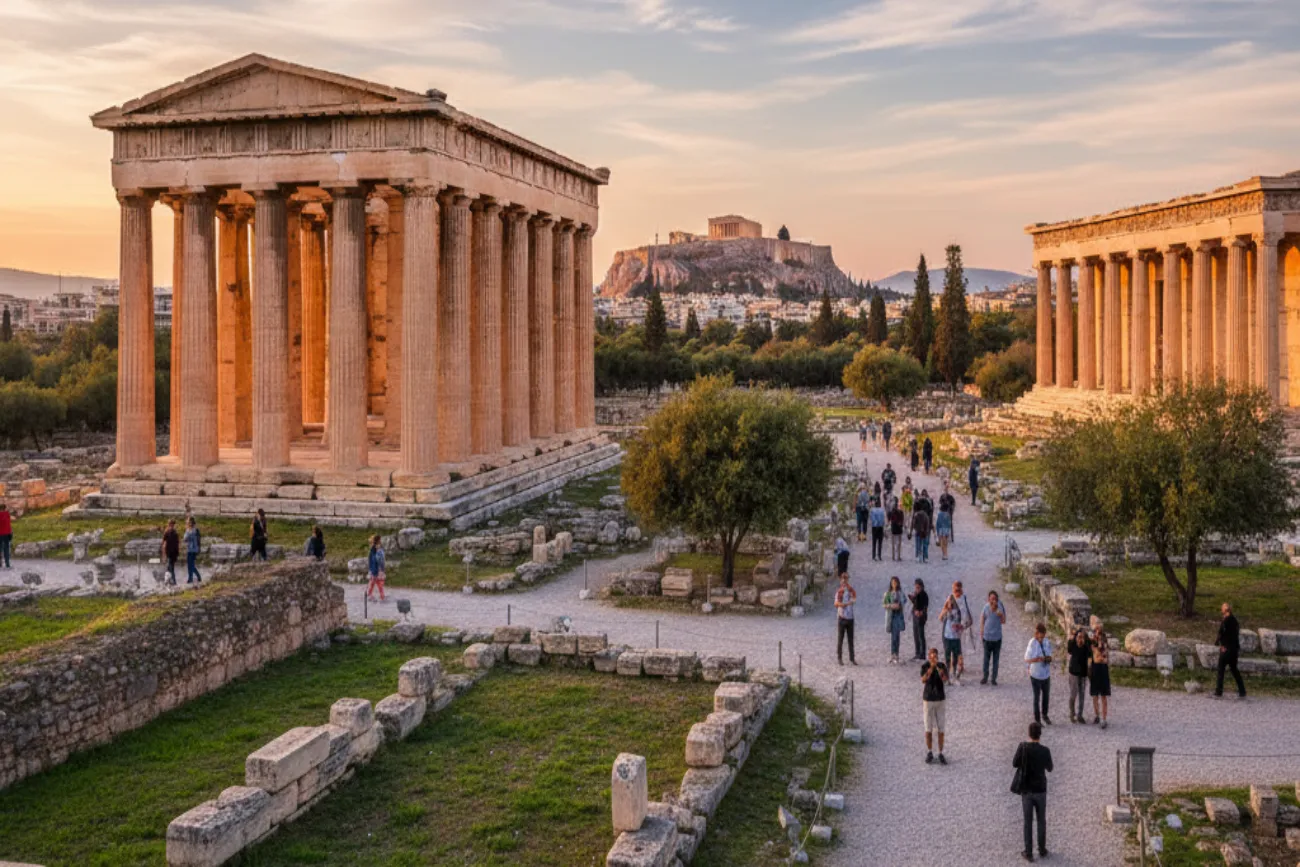
Experience the Timeless Charm of Greece’s Historic Heart : Ancient Agora